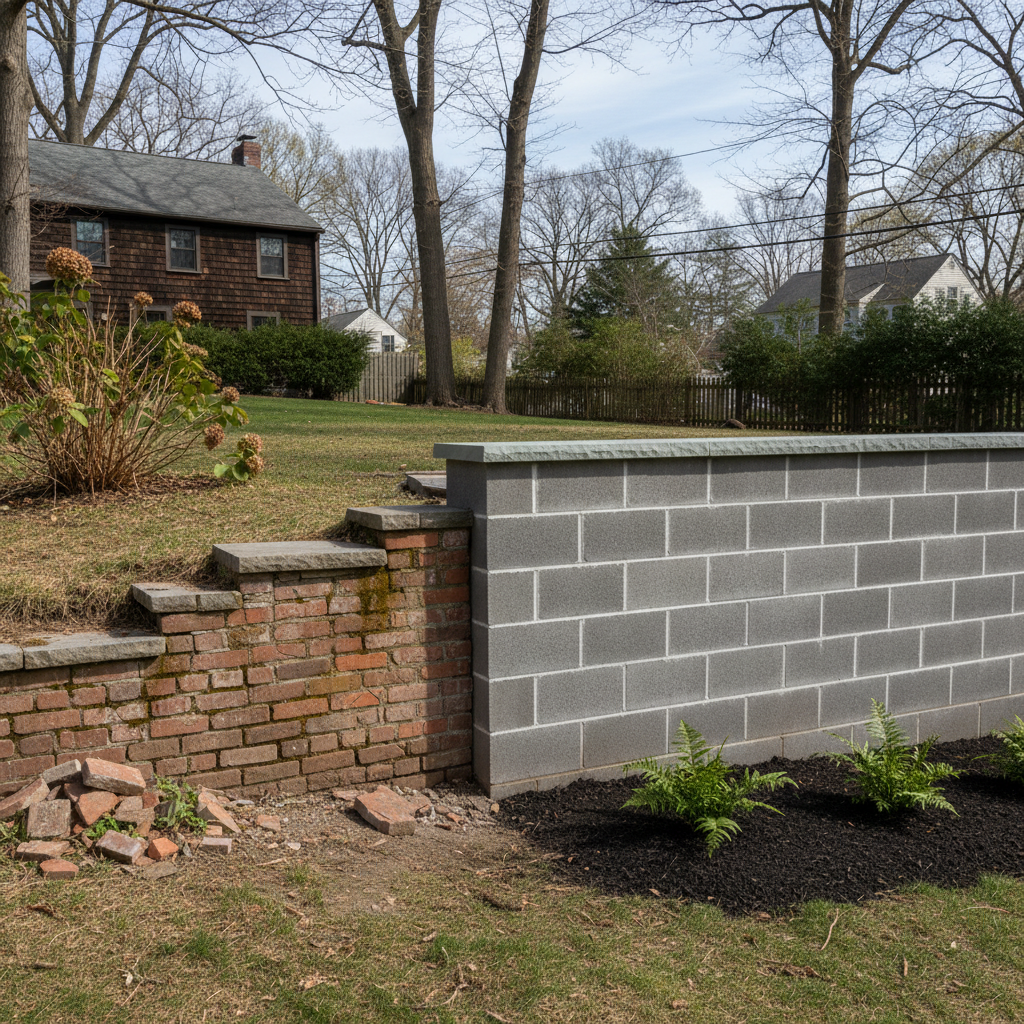
Thinking about putting up a block wall on your property? Maybe you need a foundation wall for an addition, or a retaining wall to hold back a slope, or even just a sturdy garden wall. You've got a couple of main options, and knowing the difference upfront will save you a ton of headaches and cash later on. Here in Brookline, especially with our varied ground and those brutal winters, picking the right method isn't just about how it looks; it's about what's going to last.
Traditional Mortared CMU Walls
This is probably what most people picture when they think of a block wall: concrete masonry units (CMUs), stacked one on top of the other with mortar in between. It's a classic for good reason. These blocks are tough, usually 8x8x16 inches, and they create a solid, single structure once the mortar sets.
Cost
Initially, a mortared CMU wall can sometimes seem a bit more expensive than dry-stack, mostly because of the work involved. You're paying for the blocks, the mortar, and then the skilled masons who know how to lay them perfectly straight and level, making sure the joints are strong and even. Plus, if it's a foundation or a structural retaining wall, you'll probably need rebar and concrete filling inside the block cores, which adds to both material and labor costs.
Durability & Stability
This is where mortared CMU really shines, especially for anything structural. When built right, with good footings and reinforcement, these walls are incredibly strong. They can handle a lot of sideways pressure, like holding back a hillside or forming your house's basement. The mortar locks everything together into one stiff unit. They won't budge, even with Brookline's freeze-thaw cycles trying to push things around.
Maintenance
Generally, you won't have much maintenance to do. You'll want to keep an eye on the mortar joints over the years, though. Cracks can show up, especially if the ground moves or water gets in, and that's when you'd look into tuckpointing. But honestly, a well-built CMU wall is pretty much a set-it-and-forget-it deal for decades.
Appearance
A plain CMU wall isn't exactly pretty to look at. It's built for function. That's why people almost always finish them with something else: stucco, brick veneer, stone veneer, or even just paint. This adds another layer of cost and work, but it gives you a lot of freedom in how the wall fits with your home's style. You can make it look exactly how you want.
Segmental Retaining Walls (Dry-Stack)
These are the interlocking block systems you see a lot for landscaping, garden walls, and non-structural retaining walls. The blocks have a lip or pin system that connects them without mortar, relying on gravity, friction, and the block's own weight to stay put. Think of them like giant LEGOs for your yard.
Cost
Often, dry-stack walls can be easier on the wallet when you first build them. The blocks themselves might be a bit more specialized, but the labor is generally less intense since you're not mixing and applying mortar. For smaller, simpler walls, it's a pretty efficient way to go. However, for taller walls, you'll need a lot of gravel backfill and drainage, which can add up.
Durability & Stability
Dry-stack walls are durable enough for what they're designed to do. They're great for retaining walls up to a certain height (usually 3-4 feet without special engineering, more with proper design and geogrid reinforcement). The