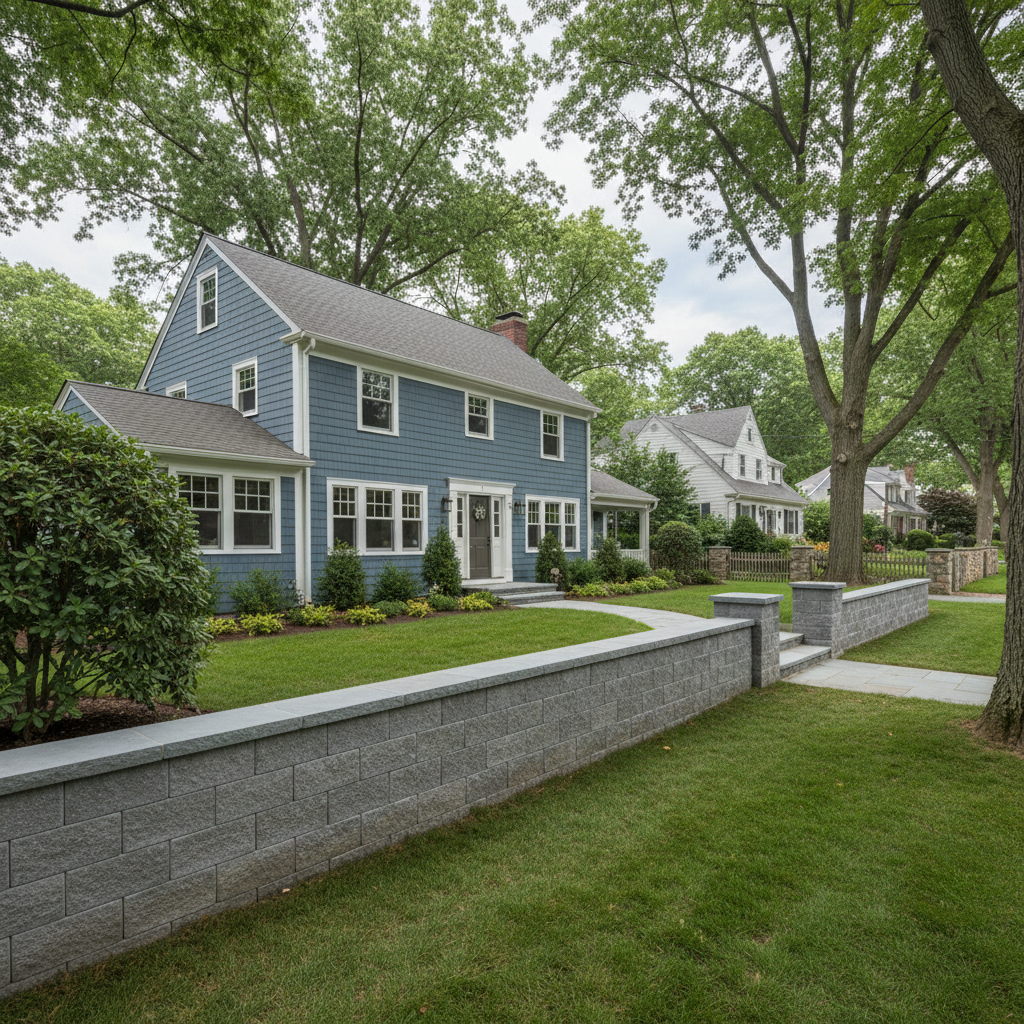
Ever driven around Brookline and seen a block wall that just looks… off? Maybe it’s leaning a bit, or there’s a big crack running through it, or the mortar’s crumbling out. I see it all the time, honestly, and it usually comes down to one thing: not really understanding what it takes to build a block wall the right way, especially here in our neck of the woods.
A block wall isn't just a stack of concrete blocks, you know. It's a structural element, whether it's holding back a hillside, forming a foundation, or creating a sturdy garden bed. And getting it wrong can lead to some real headaches and costly repairs down the line. Let's talk about what actually goes into making a block wall stand the test of time right here in Brookline.
Understanding Brookline's Ground Conditions
Our soil here isn't always the easiest to work with. We've got a mix, but often you're dealing with clay-heavy soils that can expand and contract a lot when the moisture changes. Then there's the freeze-thaw cycle, which is a huge factor. When water in the ground freezes, it expands, pushing against anything in its way – including your carefully built wall. When it thaws, the ground settles. If the wall isn't designed to handle that movement, you'll see cracking, bowing, and eventually, failure.
That's why proper excavation and foundation prep are non-negotiable. You can't just plop blocks on top of loose soil, can you? We're talking about digging down to stable ground, laying a proper footing (often reinforced concrete), and making sure there's good drainage behind the wall. Without that solid base, your wall is doomed from the start. I've seen too many DIY or inexperienced jobs where they cut corners here, and it always shows up a few winters later.
Drainage is Your Wall's Best Friend
This goes hand-in-hand with ground conditions, naturally. Water is the enemy of any masonry structure if it's not managed properly. For a retaining wall, you absolutely need a way for water to escape from behind it. That means things like a gravel backfill, a drainage pipe (often called a 'French drain' or 'weeping tile') at the base, and weep holes through the wall itself. If water builds up behind the wall, it creates immense hydrostatic pressure that can push even the strongest walls over.
Think about some of those steep, terraced yards you see in areas like Washington Square or around Fisher Hill. Those retaining walls are working hard. If they don't have proper drainage, especially after a heavy rain or snowmelt, they're going to fail. It's not a matter of 'if,' but 'when.'
Common Block Wall Projects in Brookline
We do a lot of different block wall projects for homeowners and businesses around here:
- Retaining Walls: These are probably the most common. Whether it's to create a level yard, prevent erosion on a slope, or build up a garden bed, a well-built retaining wall adds value and functionality.
- Foundation Walls: For additions, garages, or new construction, concrete block foundations are a solid, cost-effective choice. They need to be perfectly plumb and level, and properly waterproofed.
- Privacy Walls & Fences: Sometimes folks want a sturdy, long-lasting boundary that offers more privacy and security than a traditional fence. Block walls, often faced with stone or stucco, are great for this.
- Garden Walls & Planters: While smaller, these still need good foundations and drainage if you want them to last.
Each of these has specific requirements, but the core principles of solid footings, proper drainage, and quality materials stay constant.
Why Local Expertise Matters for Block Walls
You might think concrete blocks are concrete blocks, no matter where you are. And sure, the materials are similar. But it's knowing how those materials interact with our specific environment – the freeze-thaw cycles, the soil types, the local building codes, and even the common architectural styles – that makes all the difference. A contractor from out of state or someone who mostly works in a different climate might not understand the nuances of building for a New England winter.
We've been doing this for years at Absolute Masonry Inc., right here in Brookline. We've seen what works and what doesn't. We know the local suppliers, the inspectors, and what it takes to build something that will last for decades, not just a few seasons. When you're investing in a block wall, you're investing in the structural integrity and longevity of your property. You want someone who knows the ground you're standing on, literally.
Don't take chances with something so fundamental. A well-built block wall is a thing of beauty and strength; a poorly built one is a constant worry and an eventual expense.