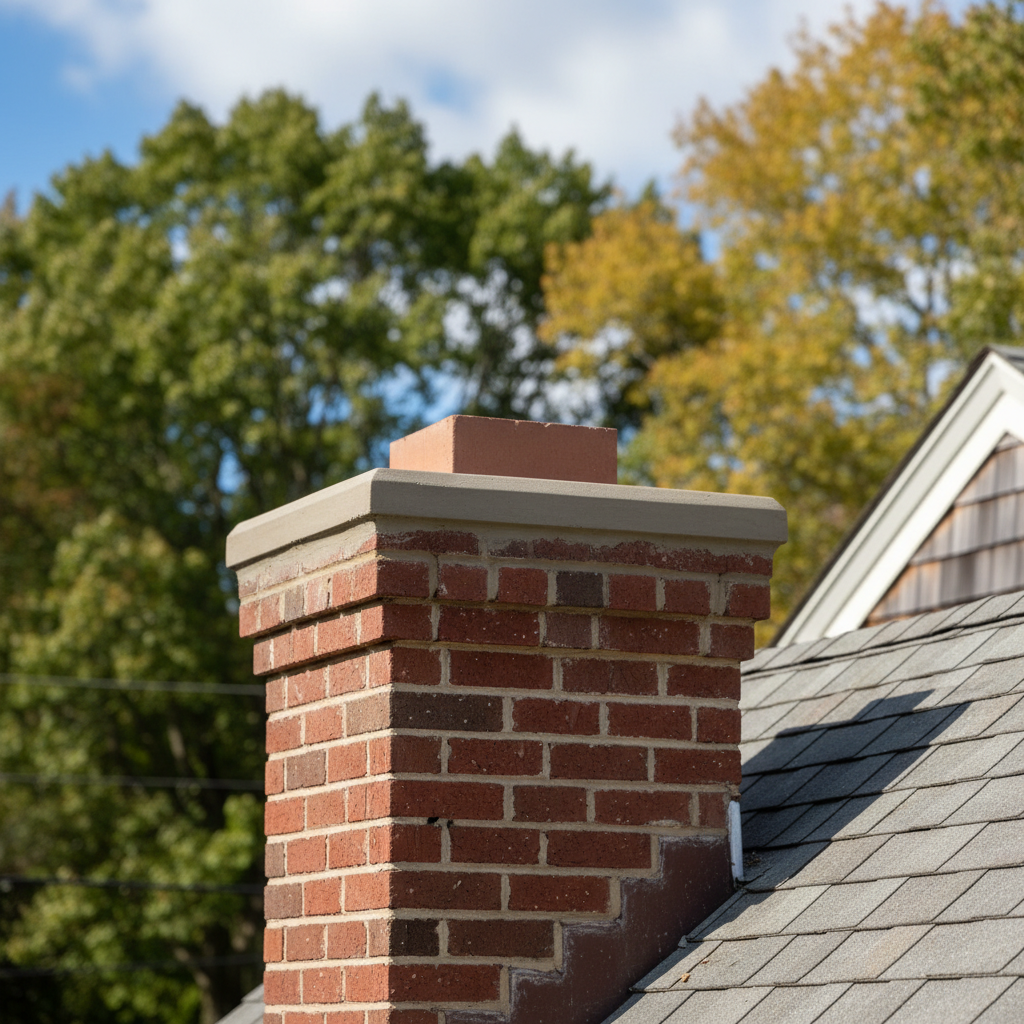
Alright, let's talk chimneys. I get a lot of calls from folks around Brookline, especially after a tough winter or when they're getting ready to sell, and they always have questions about their chimney. It's a really important part of your home, and honestly, it often gets ignored until there's a real problem. So, I figured I'd put together some straightforward answers to the most common questions I hear. No fluff, just what you need to know.
What's the difference between a chimney crown and a chimney cap? Do I actually need both?
This is a big one, and people often mix them up. Think of it this way: the chimney crown is that concrete slab right on top of your chimney stack. Its job is to shed water away from the flue and the masonry below, protecting the bricks from rain and snow. A good crown has an overhang, sometimes called a drip edge, so water doesn't just run straight down the side of your chimney. If your crown is cracked or spalling, water's definitely getting into your masonry, and that's bad news, especially with our freeze-thaw cycles here in New England.
The chimney cap, on the other hand, is that metal cover you see sitting right on top of the flue itself. It usually has a mesh screen around the sides. Its main job? To keep rain, snow, leaves, and critters – squirrels, birds, raccoons, you name it – out of your flue. You absolutely need both, no question. A solid crown protects the structure, and a good cap keeps debris and animals out of the flue. Without a cap, you're basically inviting a family of raccoons to set up shop in your chimney, and trust me, that's a mess you don't want to deal with.
My chimney has white stains. What are they, and is it serious?
Ah, efflorescence. That's what you're seeing. It's those white, powdery stains on your brickwork. It happens when water gets into the masonry, dissolves salts within the bricks or mortar, and then evaporates, leaving those salts behind on the surface. It's not usually a structural problem by itself, but it's a clear sign you've got a moisture issue. It means water is getting into your chimney where it shouldn't be, plain and simple.
How serious it is depends on where that water is coming from. Is it a leaky crown? Missing flashing? A cracked flue liner? If you don't address the underlying moisture problem, that water will eventually lead to bigger issues like spalling bricks (that's where the face of the brick flakes off), mortar deterioration, and even interior water damage. So, while the white stains aren't an emergency right this second, they're definitely a warning sign you shouldn't ignore.
How often should I have my chimney inspected and cleaned?
The National Fire Protection Association (NFPA) recommends you have your chimney inspected annually. And honestly, that's a good rule of thumb. Even if you don't use your fireplace or wood stove often, things can still go wrong. Critters can build nests, mortar can degrade, and crowns can crack. An annual inspection catches these small problems before they become expensive headaches.
As for cleaning, that really depends on how much you use it. If you're burning wood regularly throughout the colder months, you'll likely need a cleaning once a year, maybe even more if you're burning unseasoned wood, which creates more creosote. If you only use your fireplace a few times a year, you might not need a full cleaning every single year, but you still need that inspection to make sure the flue is clear and safe. It's about safety first, always.
I've got cracks in my chimney's mortar joints. Can I just patch them myself?
I hear this one a lot, and my answer is usually no, you shouldn't just patch them yourself. Cracks in mortar joints are often a sign that the mortar is deteriorating, or that there's some movement in the chimney. Just slapping some new mortar on top might look okay for a bit, but it won't fix the underlying problem, and it certainly won't match the existing mortar in terms of strength or color.
What you're probably looking at is a job for tuckpointing. That's where we carefully remove the old, failing mortar to a consistent depth and then replace it with new, properly mixed mortar that matches the original in composition and color. It's a skilled job, and doing it right ensures the repair lasts and protects the integrity of your chimney. Trying to DIY it often leads to a weaker repair, mismatched aesthetics, and ultimately, more expensive work down the line when it fails.
My chimney is leaning. Is that a major problem?
A leaning chimney is absolutely a major problem, and it's not something to put off. A chimney can lean for a few reasons: foundation issues, water damage to the masonry, or even just old age and poor construction. If your chimney is leaning, it means it's separating from the rest of your house, which can compromise the structural integrity of both the chimney and potentially the roof and walls it's attached to.
This isn't a cosmetic fix. You'll need a professional assessment to figure out why it's leaning and what the best course of action is. Sometimes it's a foundation issue requiring underpinning, other times it might need to be carefully dismantled and rebuilt. Don't wait on this one; a leaning chimney is a safety hazard and can cause significant damage if it collapses.
What's a flue liner, and why is it important?
The flue liner is the inner lining of your chimney, the part that the smoke and combustion gases actually travel through. It can be made of clay tiles, metal (stainless steel is common), or a cast-in-place material. Its job is crucial: it contains the combustion byproducts, protects the masonry from heat and corrosive gases, and provides a smooth, efficient path for the exhaust.
If your flue liner is cracked, broken, or deteriorating, it's a serious safety issue. Hot gases and sparks can escape into the combustible materials of your home, leading to a house fire. Carbon monoxide can also seep into your living space. Many older homes around Brookline, especially those built before the 1940s, might have unlined chimneys or clay liners that have seen better days. If your liner is damaged or missing, you'll need it repaired or replaced before you can safely use your fireplace or furnace. It's non-negotiable for safety.
Look, your chimney works hard, especially with our long heating seasons here. It's exposed to the elements year-round, from the biting cold and heavy snows of winter to the summer downpours. Keeping it in good shape isn't just about aesthetics; it's about the safety and structural integrity of your home. If you've got any of these issues, or just want a professional eye on your chimney, don't hesitate to give us a call at Absolute Masonry Inc. We're here to help keep your Brookline home safe and sound.